Why Customer Onboarding Is Crucial for Client Success
Most onboarding programs measure team output instead of customer outcomes: tasks completed instead of decisions enabled, launch dates instead of time to first value, kickoff calls instead of the sales handoff where onboarding actually starts. The teams that win track stakeholder turnover as their leading risk indicator and run segmented playbooks, even though that costs more upfront than putting every customer through the same process.


Most onboarding problems aren't onboarding problems. They're alignment problems, scoping problems, or handoff problems wearing an onboarding costume. By the time a customer is six weeks in and frustrated, the root cause usually traces back to something nobody owned at week one.
That's the lens we use when teams ask me how to fix their onboarding: don't start with the timeline, start with where the silent failures live.
What does customer onboarding actually mean in SaaS?
Customer onboarding is the work of turning a signed contract into a customer who is using your product to do the thing they bought it to do. That's it. Everything else, the kickoff calls, the integration runbooks, the training sessions, exists in service of that outcome.
The mistake most teams make is treating onboarding as a sequence of tasks to complete rather than a sequence of decisions a customer needs to make. Tasks are easy to track. Decisions are where customers stall, and stalled decisions are where deals quietly die between signature and renewal.
A reasonable scope for onboarding includes:
Alignment on success criteria with the customer's economic buyer
Technical setup, integrations, and data validation
Configuration, provisioning, and security review
Role-based enablement for admins and end users
A defined first outcome the customer can point to and say "this is working"
If you can't name that first outcome before kickoff, you don't have an onboarding plan. You have a project plan.
How does onboarding affect retention and expansion?
The pattern we see most often is teams measuring onboarding by completion rate when they should be measuring it by the customer's ability to make a decision they couldn't make before. Completion rates tell you whether your team did their job. Decision-making tells you whether the customer got what they paid for.
The retention math follows from this. A customer who finishes onboarding having checked every box but still doesn't trust the data enough to act on it will not renew, regardless of what your completion dashboard says. A customer who skipped half the checklist but is running their weekly meeting off your dashboards will renew and probably expand.
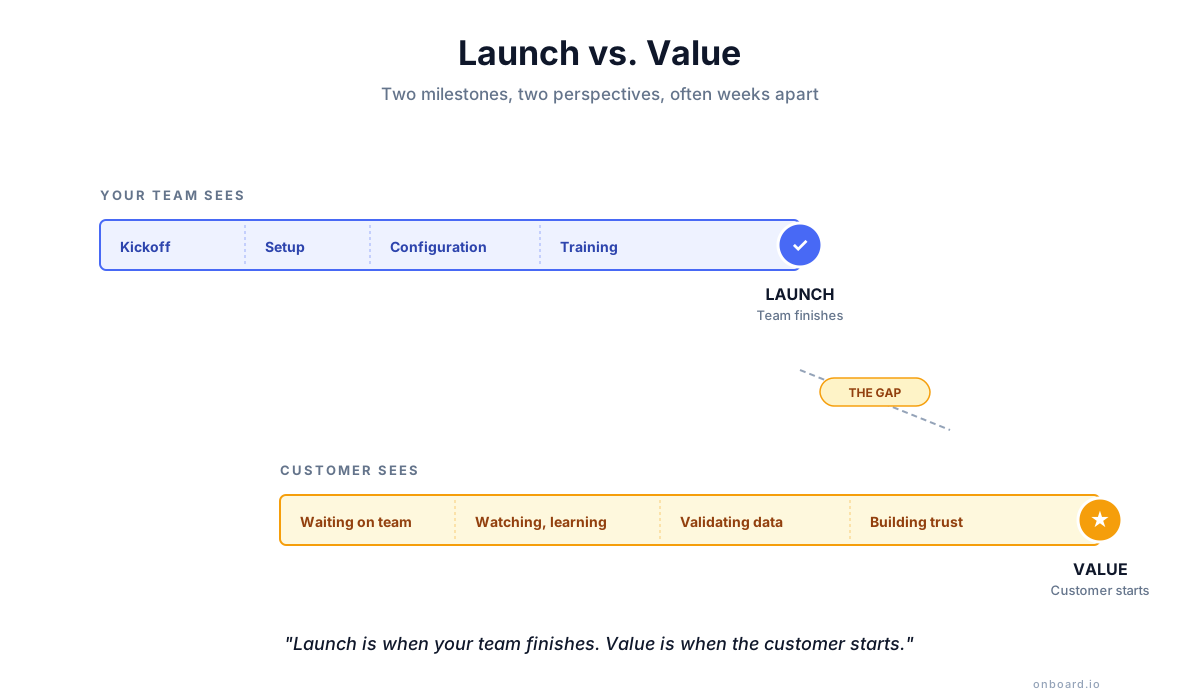
Launch is when your team finishes. Value is when the customer starts.
What should you measure during onboarding?
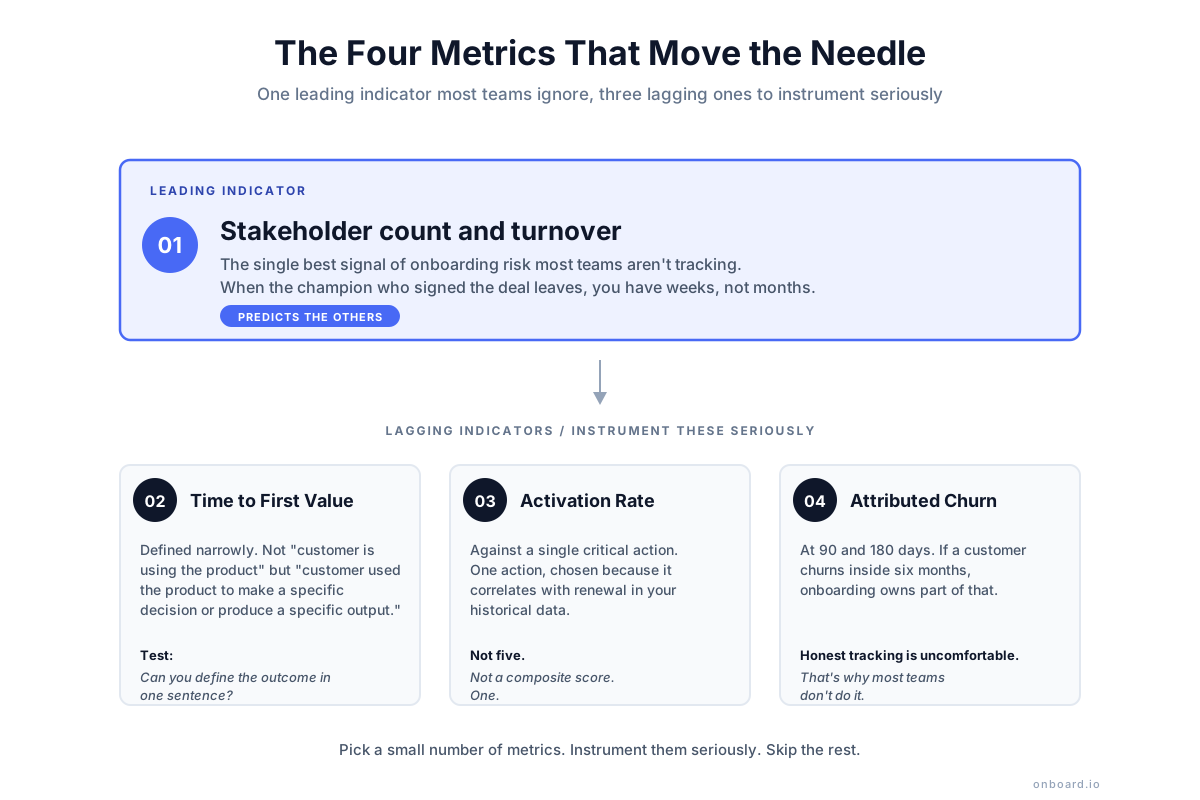
Pick a small number of metrics and instrument them seriously. The temptation is to track everything, which produces dashboards nobody reads and decisions nobody makes.
The metrics that have actually moved the needle in onboarding programs I've seen up close:
Time to first value, defined narrowly. Not "customer is using the product" but "customer used the product to make a specific decision or produce a specific output." If you can't define the outcome in one sentence, you can't measure it.
Activation rate against a single critical action. One action, chosen because it correlates with renewal in your historical data. Not five, not a composite score. One.
Onboarding-attributed churn at 90 and 180 days. If a customer churns inside six months, onboarding owns part of that. Tracking this honestly is uncomfortable and that's why most teams don't do it.
Stakeholder count and stakeholder turnover. The single best leading indicator of onboarding risk I've ever watched is "the champion who signed the deal left the company." If you're not tracking who your stakeholders are and whether they're still there, you're flying blind.
How should you segment onboarding by customer type?
Not every customer needs the same onboarding motion, and a one-size-fits-all playbook either underserves your top accounts or overwhelms your smallest ones. The two dimensions worth segmenting on are technical complexity and stakeholder risk.
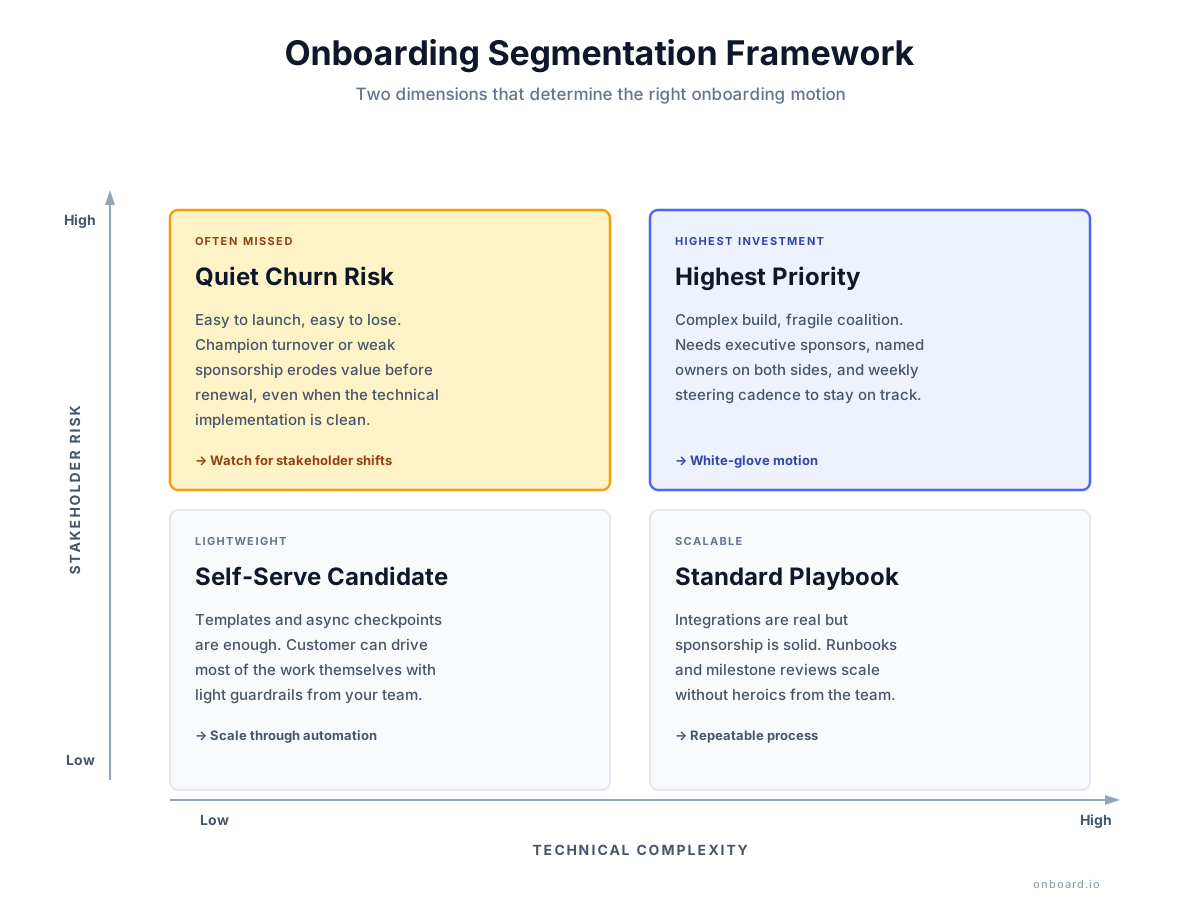 The framework above gives you four scenarios:
Self-serve candidate (low complexity, low stakeholder risk): templates and async checkpoints are enough.
Standard playbook (high complexity, low stakeholder risk): integrations are real but sponsorship is solid. Runbooks and milestone reviews scale without heroics.
Quiet churn risk (low complexity, high stakeholder risk): easy to launch, easy to lose. Champion turnover or weak executive sponsorship will erode value before renewal even if the technical implementation is clean.
Highest priority (high complexity, high stakeholder risk): complex build, fragile coalition. These accounts need executive sponsors, named owners on both sides, and weekly steering cadence.
The "quiet churn risk" quadrant is the one most teams miss. Easy implementations get less attention by definition, and that inattention is exactly what kills them when the buying coalition shifts.
What are the stages of effective onboarding?
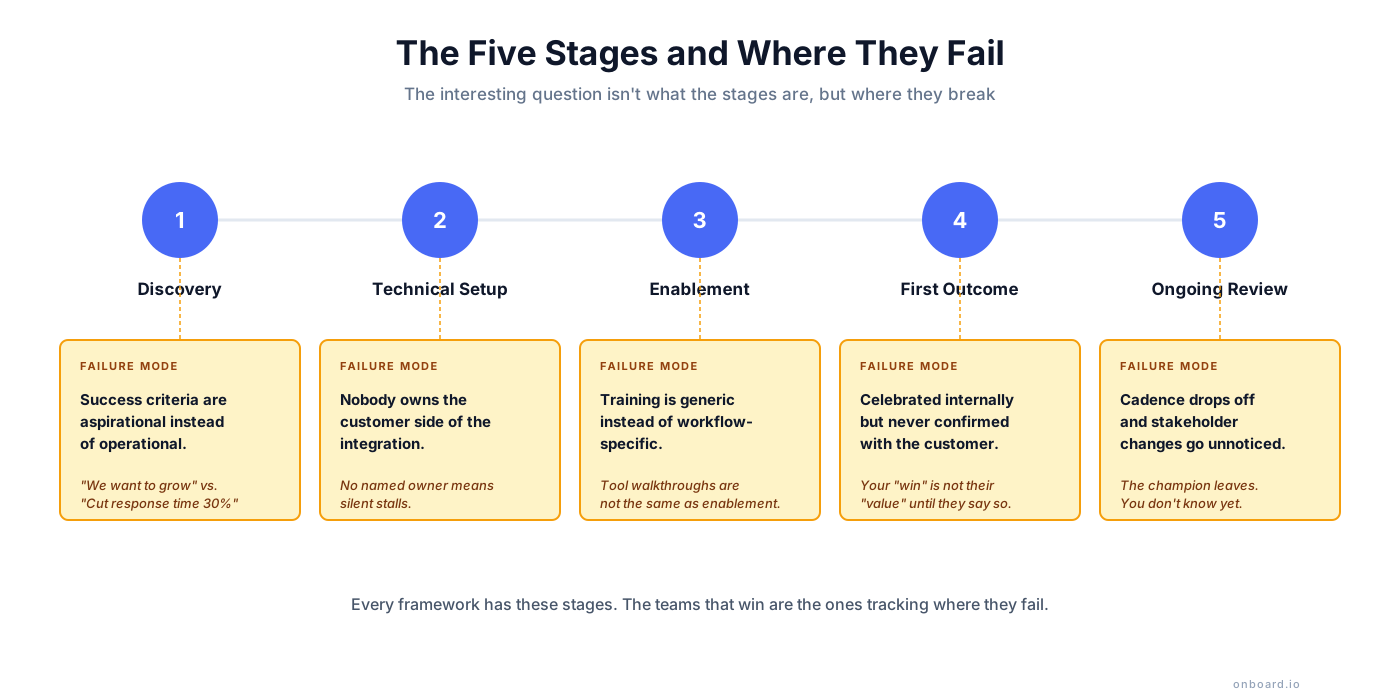
The stages themselves are unremarkable. Discovery, technical setup, configuration, enablement, first outcome, ongoing review. Every onboarding framework has some version of this. The interesting question isn't what the stages are, it's where the failure modes live between them.
Stage | Where it Fails |
Discovery | Success criteria are aspirational instead of operational |
Technical setup | Nobody owns the customer side of the integration |
Enablement | Training is generic instead of workflow-specific |
First outcome | Celebrated internally but never confirmed with the customer |
Ongoing review | Cadence drops off after launch and stakeholder changes go unnoticed |
What pitfalls should onboarding teams avoid?
The pitfalls worth naming are the ones that don't look like pitfalls in the moment.
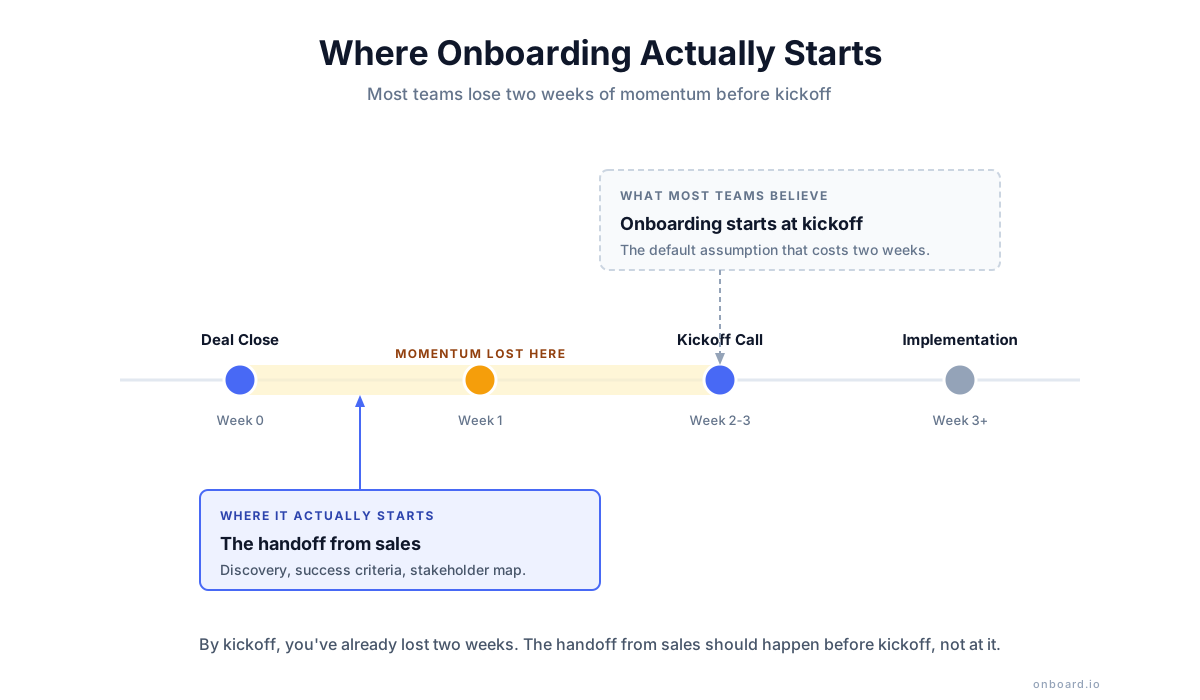
Treating the kickoff call as the start of onboarding. By kickoff, you've already lost two weeks of momentum from the deal close. The handoff from sales should happen before kickoff, not at it.
Confusing customer-facing visibility with customer accountability. Giving a customer a dashboard of their tasks does not mean they will do them. Visibility without a named owner and a deadline is decoration.
Optimizing for the average customer. Playbooks designed for the median deal will underserve your top accounts and overwhelm your smallest ones. Segmented playbooks are more work upfront and pay back every quarter.
Letting onboarding own metrics that depend on other teams. If product is six months behind on a feature the customer was sold, onboarding cannot fix that with a better launch plan. Be honest about which metrics you actually control.
How does Onboard help teams scale this?
The reason we built Onboard is that the work above, defining success criteria, segmenting playbooks, tracking stakeholder changes, confirming outcomes with customers, is hard to do consistently in spreadsheets and generic project tools. Not impossible, just hard enough that teams stop doing it under pressure.
Onboard gives implementation and customer success teams reusable launch plan templates segmented by customer type, customer-facing visibility with named owners on both sides, and the kind of stakeholder tracking that surfaces risk before it becomes churn. The goal isn't to add another tool. It's to remove the operational friction that makes good onboarding practices fall apart at scale.
FAQ's
What's a realistic time to value for SaaS onboarding?
It depends entirely on what you've defined as value. SMB customers buying a self-serve product can hit value in a week. Mid-market customers with three integrations, a security review, and a champion who needs to align two other departments will not, no matter what your sales team promised. The honest answer is that TTV is a function of how clearly you defined the first outcome during discovery, not a function of customer segment.
How do you actually calculate onboarding ROI?
Compare cohorts before and after a specific change to your onboarding process, and look at retention at 6 and 12 months for each cohort. Avoid the trap of attributing every retention improvement to onboarding when product, pricing, and CS motions are also changing. If you want a defensible number, isolate one variable.
Why use a dedicated platform instead of project management tools?
Generic project tools are built for internal teams managing internal work. Onboarding is external work with shared ownership across two organizations, and the tooling needs to reflect that. Whether you use Onboard or build something internally, the test is whether your customer can see what they own, what you own, and what's blocking the next decision, without asking.


